This morning as Garret was lining up with his classmates
outside the classroom, getting ready for their 10 am class, one of his
classmates remarked to him, "Hoy, dako!" I was nearby when I heard it
and my chest immediately tightened. I inhaled deeply before telling the
kid as calmly as I could, "His name is not 'Dako'. His name is Garret."
"Dako" in our vernacular means big.
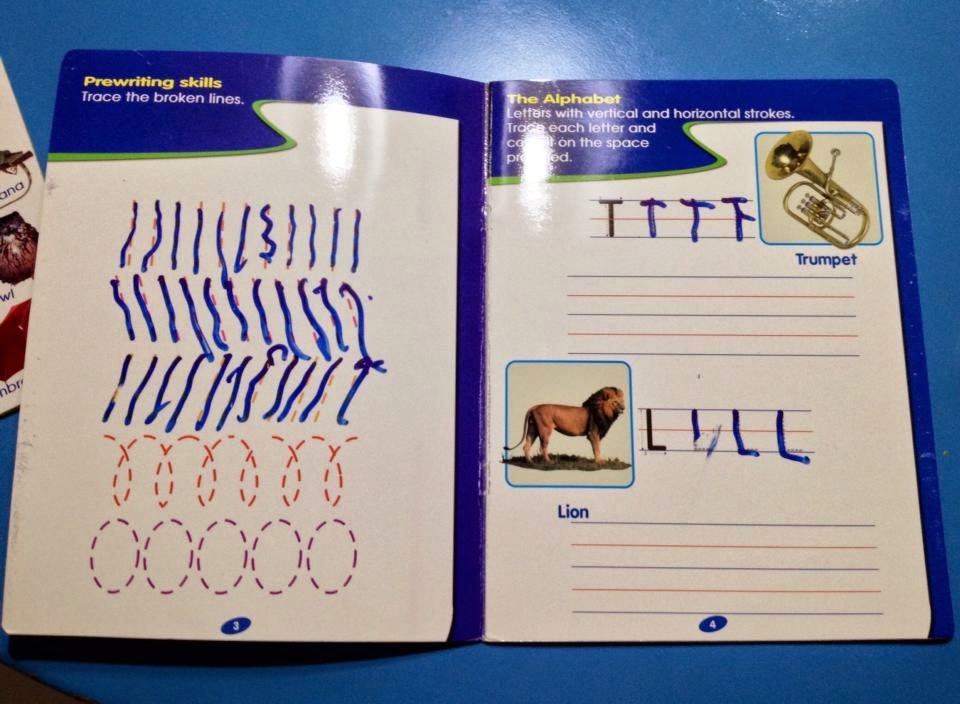
Garret attends Kinder 1 classes. He is 9 years old. His classmates are 5-6 year-olds. Obviously
he is physically taller and bigger than his classmates. But this is
where his level of cognition and social skills roughly are. So we
decided to place him in the level where he is most adaptive, and can
relatively cope with the lessons and simply put, happy.
At this age it might be safe to say that these kids have no concept of discrimination yet. Yet.
This is why at this very age, it is important to veer their perception
of "differences" to the right direction before the discrimination
escalates into plain bullying.
The
kid's remark, "Dako" to my son clearly proves how he acknowledged that
Garret was different, being bigger than the rest of them. I wonder with
this acknowledgement, how much of it he understands or interprets as
being, good, not good, acceptable, okay, not okay. Of course, it is not
his fault if he perceives the being "big" as something not good because
what he sees most of the time may be according to society's so-called
"norm". The norm here being, his classmates in K1 should be of the same
height or physical build. And who knows what else he considers the
"norm" as he is taught at home and in other places. I do hope though
that he perceives "dako" as interesting, to begin with.
My
mama bear instinct shot up upon hearing that kid's remark. Even though I
was aware at the time that it may be my own interpretation of how the
kid perceived his own words, I still felt compelled to defend my son and
in the process educate his classmate.
What
happened today may be my cue that it is the right time to talk to the
entire class about their "big" classmate. If I'm lucky enough, their
young minds may still be in the level where they indeed see something
different as interesting. Where they see "not like them" as something to
be curious and to learn more about.
Having
said all that, what then could be the right direction where we could
steer the ships of these youngsters' perception? Or for the rest of the
population who are not young anymore but are in need of a change in
perception?
Perhaps we could start with acknowledging the different. Acknowledging
means not ignoring. How many of us have been taught that it's rude to
stare at people? What happens instead of staring? We ignore people,
don't look at them in the eye especially the ones who are "different".
It's like the elephant in the room. Everybody knows it's there but
nobody wants to acknowledge it. Now, what does that achieve? Nothing
really, except awkwardness and discomfort. As an autism parent, I have
had my fare share of stares in public places whenever I bring my boys to
the grocery. What do I do? I look at them in the eye and smile at them.
They have no choice but to smile back. Whether it was out of
embarrassment that I caught them staring or whether they understood our
predicament, I don't know. All I know is a smile is one way of breaking
the "rudeness". It gives us autism parents a feeling of communal
understanding, an assurance that even if our kids are having a meltdown
at the mall, nobody is judging us or our kids. And especially during
those times where we really don't have the strength anymore to smile at
anybody, when a stranger shows us a kind, understanding face, it takes a
fraction of a load off our shoulders. On this note, however let me say
that there is a huge difference between acknowledgement and judgment. I
think this is self-explanatory.
After acknowledging what is different then maybe we could move on to knowing more about the different.
Ignorance
is not always bliss. It hurts our kids. It hurts the autism parents,
the family members of the kid with autism. What is strange scares us.
What is unknown brings anxiety. And the only way to eradicate fear and
ignorance is to confront it. Google it, Autism, Down Syndrome, Global
Developmental Delay, Cerebral Palsy, Mental Delay and all else. If you
don't have internet connection, which I highly doubt, ask a
pediatrician. Or ask us, ask the parents. Don't worry we won't bite. We
would appreciate it even if you ask about our kids. Kindly, of course.
But we will bite those who make snide, purposeful, ignorant remarks
about our kids and our lives.
With knowledge comes a shift in paradigm. In perception. In beliefs. Which we hope will open the way to acceptance.
If not acceptance, then tolerance to begin with. The shift in paradigm
that we hope people will have when they know more about what our kids'
disabilities are is the realization that all human beings are indeed
created different. And that different is okay. Different is not
something to be feared. Different is not something to be chiseled into
the "norm". Different is the source where we voraciously learn from each
other.
The ultimate direction that we hope people can arrive at, that kids can arrive at is celebration. A Celebration of the Different. To
not only acknowledge, know and accept our children. But more
importantly to marvel at their individual differences. Their own
individual differences. That even we members of the neurotypical /
normal race are remarkably different. To give value to all the quirks
and various physical, cognitive and social facets of our children.
Verbal or non-verbal. Restless or behaved. Short in height or tall.
Small or Big.
Autism parents, special needs parents
celebrate every milestone. There are no little achievements. Little is
not in our vocabulary. Because we know the value of every single thing
our children work hard for and accomplish every single day. Therefore we
shout to the world their successes. We pause in our tracks and thank
the heavens for the very persons our children are. We celebrate them.
Every part of who they are.
What if parents of
normal kids out there realize the value of even the minutest detail of
their own children's efforts for striving and not just the first honor
medals and valedictorian certificates? What if parents of neurotypical
kids celebrate the kindness of their children and not just the 100 of
every subject in their report cards? What if they celebrate their
children who don't fit into the "old school" system, who learn through
the arts and sports? What if parents celebrate how their children are
able to learn life skills as simple as doing house chores willfully,
cleaning up after their own messes, running errands efficiently not just
how they read a thousand pages of Algebra and Calculus books? When that
happens, then that will be the real celebration. That will be the real
essence of the Celebration of the Different.
"His
name is not 'Dako'. His name is Garret." Garret's classmate looked at
me silently seemingly afraid that I would reprimand him. I looked at his
i.d. and said, "J, your classmate's name is Garret. Okay?" He still
kept quiet. I offered him my palm for a high-five and smiled at him. He
high-fived me, a smile slowly creeping into his face.
Come
Monday next week, I'll be speaking to Garret's class and try the best
way I can to steer them in the right direction of how they view the
"different". How they see my big son. How they perceive Garret and his
being different. Hopefully, they'll learn to accept that Big can be
okay. That Big can be in fact, beautiful. And hopefully they will grow
up and learn to celebrate the big, the different.